Japanese transcription
Transcribe a Japanese briefing or interview into editable text. Replay names and loanwords before preparing a quote or timed subtitles.
Check a deadline in a Japanese briefing
Keep 次の会議までに with the action
The sample says the estimate will be checked by the next meeting. Replay the whole sentence before you note the deadline or set the end time of its subtitle.
次の会議までに見積もりを確認します。How it works
Upload your recording
Include the introduction when clipping a briefing with names or product terms. It gives you a second place to hear them.
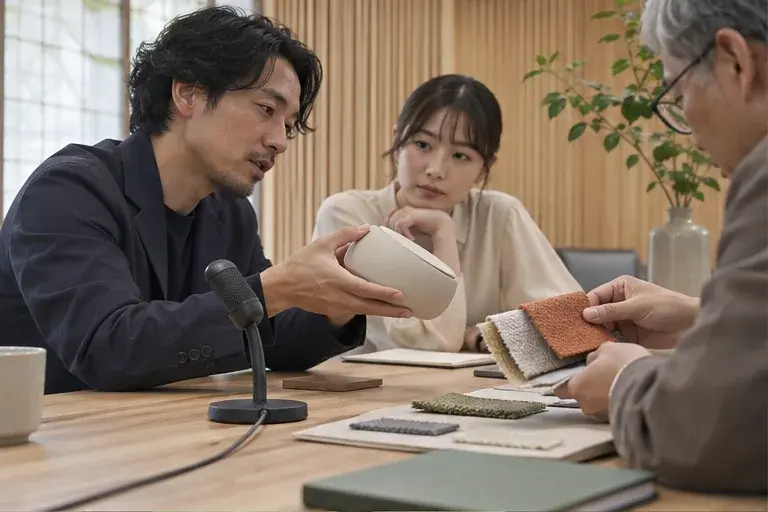
Source recording Transcribe the audio
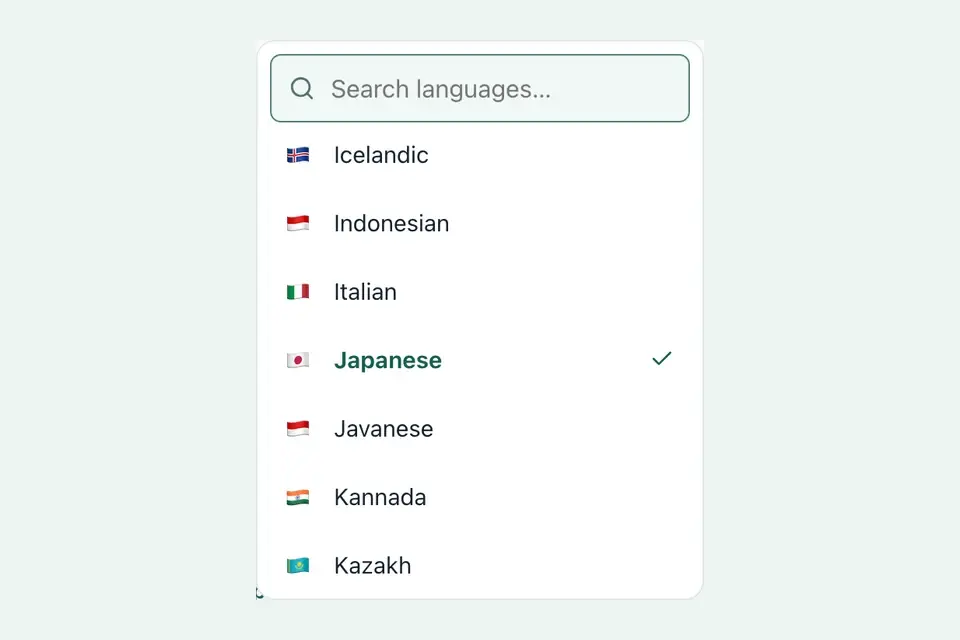
Start with Auto detect, or choose Japanese from the recording language menu.
Review and download the text
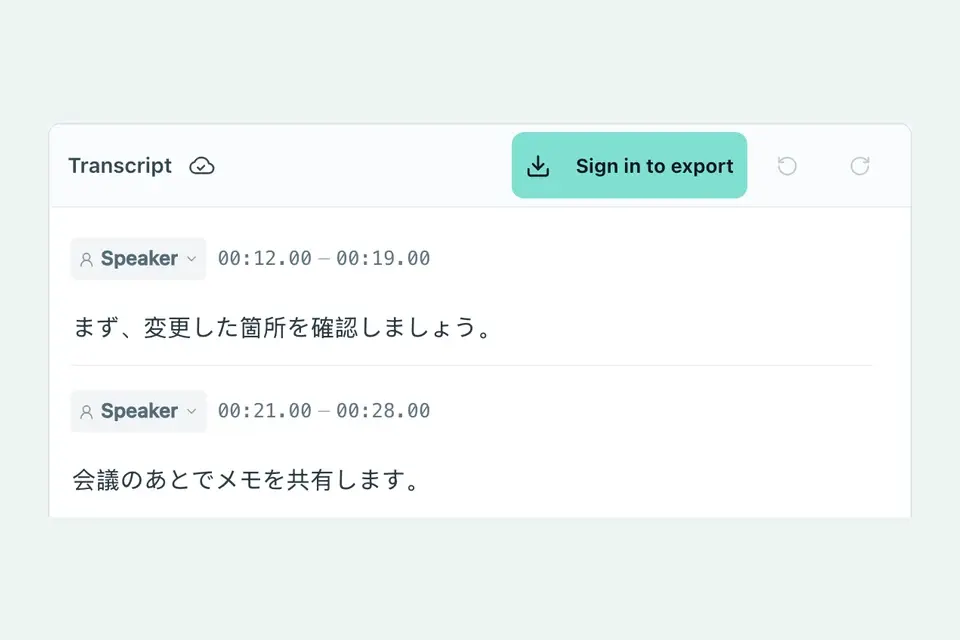
Replay a line by its timestamp and correct the transcript in the editor. Sign in to download a TXT copy.
Ways to use the transcript
Caption a Japanese product briefing
Check a product name against the slides, then adjust cue timing and sign in to download SRT or VTT.
Prepare a quote from a Japanese interview
Replay the speaker’s form of address and check the kanji against your interview notes before copying the quote.
Supported files and exports
Use a transcript for notes and quotes. Choose SRT or VTT when captions need timing.
- Audio and video uploads
- MP3, M4A, AAC, WAV, FLAC, OGG, Opus, MP4, MOV, WebM, MKV
- Transcript files
- TXT, Markdown, CSV, JSON
- Timed subtitle files
- SRT, VTT
What you can do with a transcript
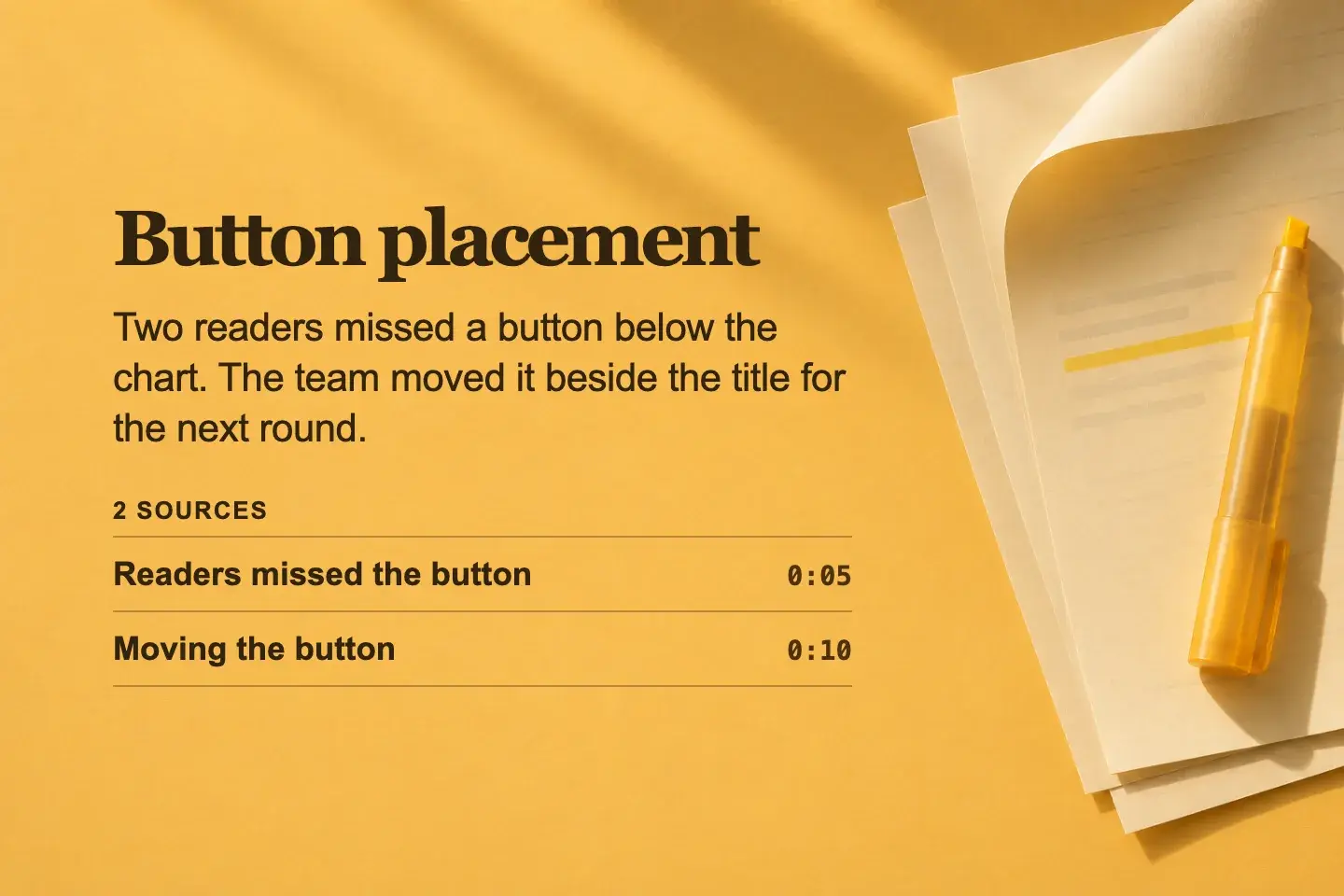
Read the summary and follow its links to the original passages.
User reviews
Illustrative examples
We kept the speaker’s wording
I transcribed the recording in the language the speaker used, then replayed the introduction to check a person’s name before sharing the text.
Hana MorrisInterview producerA term made sense in context
I compared a phrase in the transcript with the written brief. The time beside the line helped me hear how the participant actually said it.
Adrian ChenUX researcherA short sample was enough to start
I started with a few clear sentences on Auto detect. Once I recognized the language, I selected it and compared the same passage again.
Yara ColeCopy editorWe checked each language on its own
The recording switches languages midway through. I checked a short excerpt from each part before using the wording in our notes.
Isabel TanOperations leadEach quote keeps its place in the interview
I sent the team a short list of quotes with timestamps. When someone asked for context, we knew which part of the recording to replay.
Devon LiuResearch assistantThe existing text was enough to start
I opened the TXT I already had and cleaned up the wording before exporting the version I could send to the team.
Owen HaleContent editor

Frequently asked questions
- Can I correct a person’s kanji in the editor?
- Yes. Replay the name to confirm its reading, then check the characters against a written source such as a speaker bio. Edit the name before exporting.
- How should I write Japanese loanwords and product names?
- Listen to the full phrase and check the product’s own spelling. Use the published spelling when the transcript will go into a report or subtitle file.
- What does Unlimited include?
- Starter and Team previews list unlimited transcriptions and up to 10 hours per recording. Checkout is in test mode. Compare plans.
- How large or long can my file be?
- Free includes 3 transcriptions a day, up to 10 minutes and 100 MB per recording.
- Where can I find the refund and cancellation rules?
- See Refunds and cancellation for the current checkout status.